Eternal Record / Aerisathyn Pantheon

Callonirion

Intermediate deity of joy, celebration, unity, and the fellowship that keeps communities whole.

Seal of the Aelorian Archives
Archival Release Authorization

Released by the Aelorian Archives with ecclesiastical assent of the Aerisathyn and approved for circulation among the general populace.

Aerisathyn deity record preserved for public theological and cultural reference.

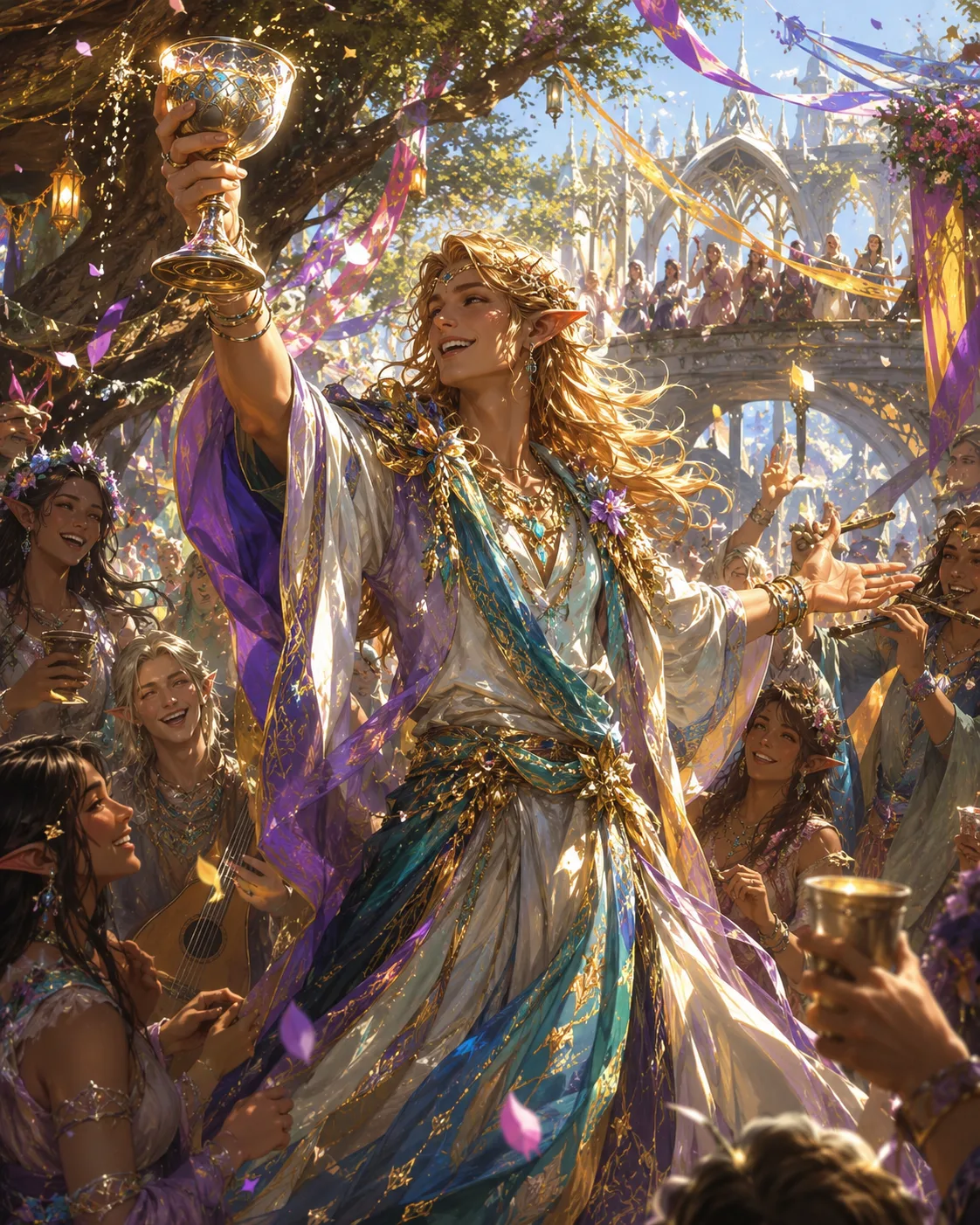
Callonirion bearing the Cup Unending amid festival light

Divine Dossier

Classification
Intermediate Deity
Disposition
Chaotic Good
Portfolio
Joy, Celebration, Unity
Worshippers
The Syl’Aeris broadly, particularly artists, musicians, performers, storytellers, festival keepers, hosts, families, community leaders, and those entrusted with preserving communal traditions. Though worship of Callonirion remains overwhelmingly Syl’Aeris in origin and practice, his name is commonly invoked by many peoples during celebrations, weddings, feasts, reunions, and communal observances as a symbol of fellowship, goodwill, and shared joy.
Sacred Symbol
A silver chalice overflowing with radiant light. The cup represents joy shared freely among companions, while the light symbolizes the bonds created when individuals gather as a community.
Common Titles
The Lord of Revelry, Bringer of Joy, The Cup Unending, Keeper of the Festival Flame, The Laughing Heart, Weaver of Fellowship
Clergy Style
Warm, welcoming, expressive, and deeply communal. Callonirion’s clergy serve as hosts, musicians, celebrants, counselors, festival organizers, performers, and keepers of cultural traditions. They teach that joy is not frivolous but necessary, that celebration strengthens communities, and that fellowship is among the strongest defenses against despair. Their devotion is measured through hospitality, artistic expression, communal service, and the creation of spaces where people may gather in peace and friendship.
Cleric Domains
Faith (10%), Fortune (15%), Maestro (30%), Passion (25%), Sunrise (20%)

Percentages represent the proportion of the deity’s clergy who serve within each domain, indicating how commonly each path is practiced within the faith.

Overview

Joy as fellowship made sacred.

Callonirion embodies joy as a force of unity. He represents celebration, fellowship, companionship, communal identity, and the bonds that transform individuals into communities.

Within the Aerisathyn tradition, joy is not regarded as an escape from hardship but as a response to it. His faithful teach that people endure because they remain connected to one another.

Divine Record

Doctrine, worship, signs, clergy, orders, and relations.

This record gathers the principal teachings, devotional structures, rites, signs, clerical traditions, orders, sects, and known tensions associated with Callonirion and his place among the Aerisathyn.

Archival Summary

Callonirion embodies joy as a force of unity. He represents celebration, fellowship, companionship, communal identity, and the bonds that transform individuals into communities. While outsiders often perceive him as a deity of feasts, music, and revelry, Syl’Aeris theology teaches that these are merely the visible expressions of a deeper truth: people endure because they remain connected to one another.

Within the Aerisathyn tradition, joy is not regarded as an escape from hardship but as a response to it. Callonirion emerged from the Syl’Aeris belief that celebration itself possesses sacred value, that shared happiness strengthens cultural memory, and that communities survive adversity by preserving reasons to gather together. Through festivals, songs, ceremonies, and communal traditions, his faithful reinforce the relationships upon which society depends.

His influence is most evident during weddings, reunions, seasonal celebrations, artistic performances, communal feasts, and moments of collective achievement. Yet his significance is often greatest during difficult times. Callonirion’s teachings hold that despair isolates while joy reconnects, and that fellowship is not merely pleasant but essential to the health of both individuals and communities.

Across Khassid, his name is frequently spoken beyond the boundaries of Syl’Aeris society. Travelers invoke him before festivals, hosts toast him before banquets, and communities of many peoples acknowledge him during celebrations. While such practices rarely constitute worship, they reflect a widespread recognition that joy shared among many is among the most enduring forces in mortal life.
Dogma

“Come. Sit at the table. Raise your voice. Share your song.

You will know sorrow. Every mortal does. Friends will part. Seasons will pass. Great works will fade. Yet do not mistake impermanence for futility. The feast is no less meaningful because it ends. The song is no less beautiful because its final note must someday fade into silence. What matters is that it was shared.

Many mistake joy for indulgence and celebration for distraction. They are wrong. A people who no longer gather soon become strangers. A family that no longer shares stories soon forgets itself. A community that no longer celebrates together begins, little by little, to come apart. Fellowship is not merely pleasant. It is one of the foundations upon which all enduring things are built.

Therefore gather often. Celebrate victories both great and small. Welcome strangers until they become friends. Preserve traditions not because they are old, but because they remind you who you are. Sing the songs your ancestors sang, and teach them to those who will come after. Raise cups to the living and remember the dead with laughter as well as tears, for remembrance without joy is only another form of grief.

When darkness comes—and it will—answer it with fellowship. Answer it with laughter. Answer it with music. Despair thrives in isolation, but joy grows when shared. A single voice may be forgotten. A chorus endures.

For no one feasts alone forever, and no people remain whole unless they choose, again and again, to gather at the same table.”

Observed Manifestation: Appearance

Callonirion is most commonly depicted as a luminous and ever-changing figure whose appearance shifts subtly according to the mood of those around him. He may appear male, female, or androgynous, though all depictions share certain qualities: warm eyes like honeyed wine, a welcoming smile, and an aura of effortless companionship.

His garments are traditionally portrayed as flowing layers of vibrant color that shift with movement and emotion, recalling festival banners dancing in the wind. He bears no weapon. Instead, he carries a silver chalice known in many traditions as the Cup Unending, said to symbolize the inexhaustible nature of joy when freely shared among a community.

Artists frequently depict him dancing, singing, raising a toast, or standing among companions rather than apart from them. Unlike many deities who are portrayed as distant or elevated, Callonirion is almost always shown participating.

Doctrine & Teaching

The central teaching of Callonirion’s faith is that joy is a communal act.

His clergy reject the notion that celebration is frivolous or secondary to more serious concerns. Instead, they teach that fellowship, friendship, and shared experiences are among the foundations upon which healthy communities are built. Songs, festivals, stories, meals, and traditions are not diversions from life; they are part of what makes life meaningful.

Callonirion’s faithful further teach that despair is most dangerous when it isolates individuals from one another. The proper response to hardship is therefore not withdrawal but connection. Communities must gather, remember, celebrate, and support one another, particularly during times of adversity.

Worship & Devotional Structure

Callonirion’s faith is notably decentralized. Temples often resemble community halls, performance spaces, gardens, amphitheaters, or public gathering places rather than formal sanctuaries.

Leadership tends to be collaborative rather than hierarchical. Clergy organize festivals, coordinate charitable gatherings, preserve local traditions, and encourage participation rather than obedience. Religious authority is often earned through service to the community rather than formal rank.

Worship commonly includes music, storytelling, dancing, communal meals, artistic performances, and celebrations marking significant milestones within a community’s life.

Rites & Observances

The First Cup

A ritual welcoming newcomers into a community through shared food, drink, and introductions.

The Festival of Many Voices

A celebration emphasizing communal participation through music, storytelling, and artistic expression.

The Lantern Gathering

A remembrance ceremony honoring those who have passed while celebrating the lives they shared with others.

The Open Table

A recurring observance in which all members of a community are invited to gather regardless of station or circumstance.

The Dawn Chorus

A Sunrise tradition celebrating new beginnings through music, fellowship, and communal reflection.

Cultural Praxis

Communities strongly influenced by Callonirion tend to value hospitality, artistic expression, social cohesion, generosity, and active participation in communal life.

His faithful are encouraged to host gatherings, support local traditions, strengthen friendships, and create opportunities for others to belong. Isolation is viewed as unhealthy when prolonged, while acts that foster connection and fellowship are widely praised.

Common Taboos

  • Deliberately sowing division within a community.
  • Excluding others from communal celebrations without cause.
  • Exploiting hospitality for personal gain.
  • Destroying cultural traditions without purpose.
  • Using joy as a means of manipulation rather than connection.
Signs & Omens

Clergy traditionally interpret the following as signs of favor:

  • Estranged friends reconciling.
  • Unexpected laughter during difficult times.
  • Communities gathering after hardship.
  • Successful festivals that strengthen social bonds.
  • New friendships formed between unlikely companions.

Signs commonly interpreted as disfavor include:

  • Persistent social fragmentation.
  • Communities abandoning shared traditions.
  • Celebrations ending in bitterness or division.
  • Isolation spreading throughout otherwise healthy communities.
  • The breakdown of trust between friends, families, or neighbors.

These interpretations arise from tradition and doctrine rather than direct divine intervention.

Relics, Sites & Anchored Presence

No universally recognized relics have been confirmed within the Archives. However, numerous communities maintain ceremonial chalices, festival banners, performance halls, and memorial plazas dedicated to Callonirion’s observances. Such sites frequently serve as important cultural centers within Syl’Aeris settlements.

Clergy & Agents

Callonirion’s clergy most commonly serve as musicians, performers, festival organizers, storytellers, diplomats, counselors, community advocates, and keepers of tradition. Their duties center upon maintaining social cohesion, preserving communal identity, and ensuring that celebrations remain accessible to all members of society.

Faith Domain clergy are uncommon but highly respected. They often serve as cultural historians, philosophers of community, preservers of tradition, and interpreters of the deeper theological significance behind celebration and fellowship. While other clergy create opportunities for connection, Faith clerics frequently concern themselves with understanding why such connections matter.

Orders & Sects

Orders

  • The Cupbearers of Dawn: Hosts, celebrants, and organizers of major communal gatherings.
  • The Chorus Eternal: Musicians, storytellers, and preservers of cultural performance traditions.
  • The Keepers of the Open Table: Clergy devoted to hospitality, inclusion, and care for the isolated.
  • The Lantern Fellowship: Custodians of memorial observances and rites of remembrance.

Sects

  • The Path of Shared Joy: Emphasizes celebration as the primary expression of devotion.
  • The Fellowship Tradition: Focuses upon community-building and preservation of cultural identity.
  • The Chorus of Resilience: Teaches that joy is most meaningful when maintained during hardship.
  • The Way of the Open Door: Stresses hospitality and the expansion of community through welcome and inclusion.
Relationships & Tensions

Callonirion shares strong theological alignment with many benevolent deities whose portfolios support communal flourishing, healing, artistic expression, and hope. His faith commonly cooperates with traditions devoted to renewal, creativity, and social harmony.

His relationship with Vaelthiron is particularly notable. While Vaelthiron celebrates artistic expression itself, Callonirion concerns himself with the connections created through shared artistic experiences. The two faiths frequently overlap and often cooperate during festivals and cultural observances.

Among the Aerisathyn, Callonirion is often viewed as complementing Aerethyss and Enannaria. Memory preserves the past, harmony preserves balance, and joy ensures that communities continue gathering to carry those things forward.

His clergy generally oppose philosophies that glorify isolation, despair, needless division, or the deliberate erosion of communal trust. While not inherently political, they are often among the first to recognize when a society’s social bonds are beginning to fray, viewing such fractures as threats not merely to happiness but to cultural continuity itself.