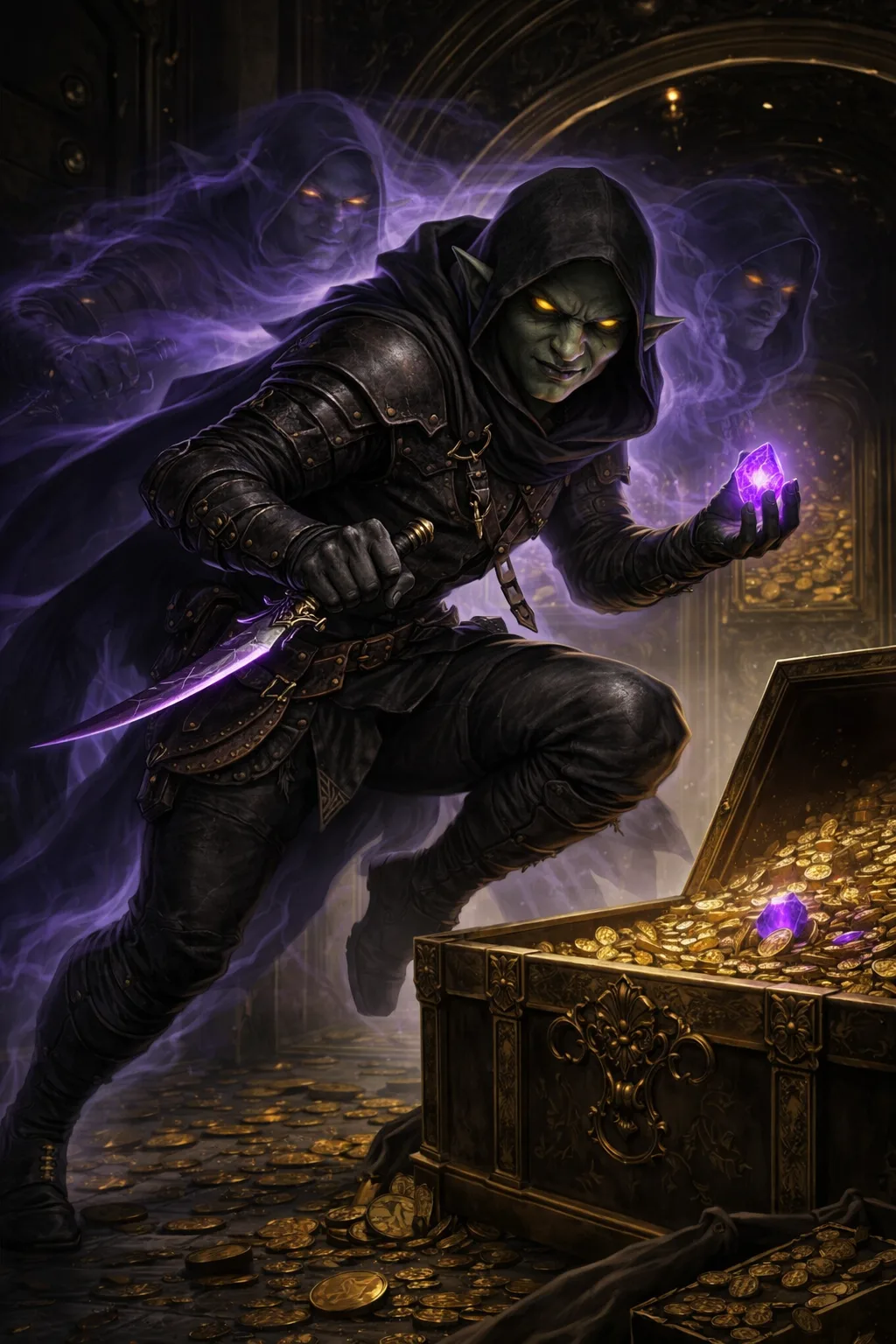
“You saw me enter through the window. Your guard saw me cross the hall. The steward swears I never left the cellar. All three of you are telling the truth as well as you can. That is the trouble with trying to remember me.”
— Perrin Softstep, Recorded Under Three Conflicting Names
The Echo Specter studies the delay between an event and the mind’s acceptance of it. In that narrow interval, movement can be misread, attention redirected, and a convincing remainder left behind.
Their art treats escape as authorship. The best route is not simply the one that avoids pursuit, but the one that gives pursuit the wrong story.
The Phantom Echo
An echo may resemble an afterimage, a repeated footstep, a silhouette turning the wrong corner, or the persistent conviction that the rogue remains where they were last seen.
The Specter uses these remnants to divide attention and make witnesses doubt the sequence of events.
Flicker and Absence
To flicker is to move during the moment another person assumes nothing has changed. Repetition and exact timing turn this into a discipline rather than luck.
The Cost of Being Unremembered
Those who live through misdirection may begin to distrust recognition itself. Some struggle to remain present with allies, fearing that every relationship is another trail to be obscured.