Deeds & Destinies / Ranger Archetype

Cliffstalker

Ranger archetypes who turn elevation, surface, and impossible angles into the path of the killing shot.

Seal of the Aelorian Archives
Archival Release Authorization

Released by the Aelorian Archives for public study of recognized vocation traditions within Khassid.

This record preserves cultural doctrine and feature names without disclosing complete mechanical instruction.

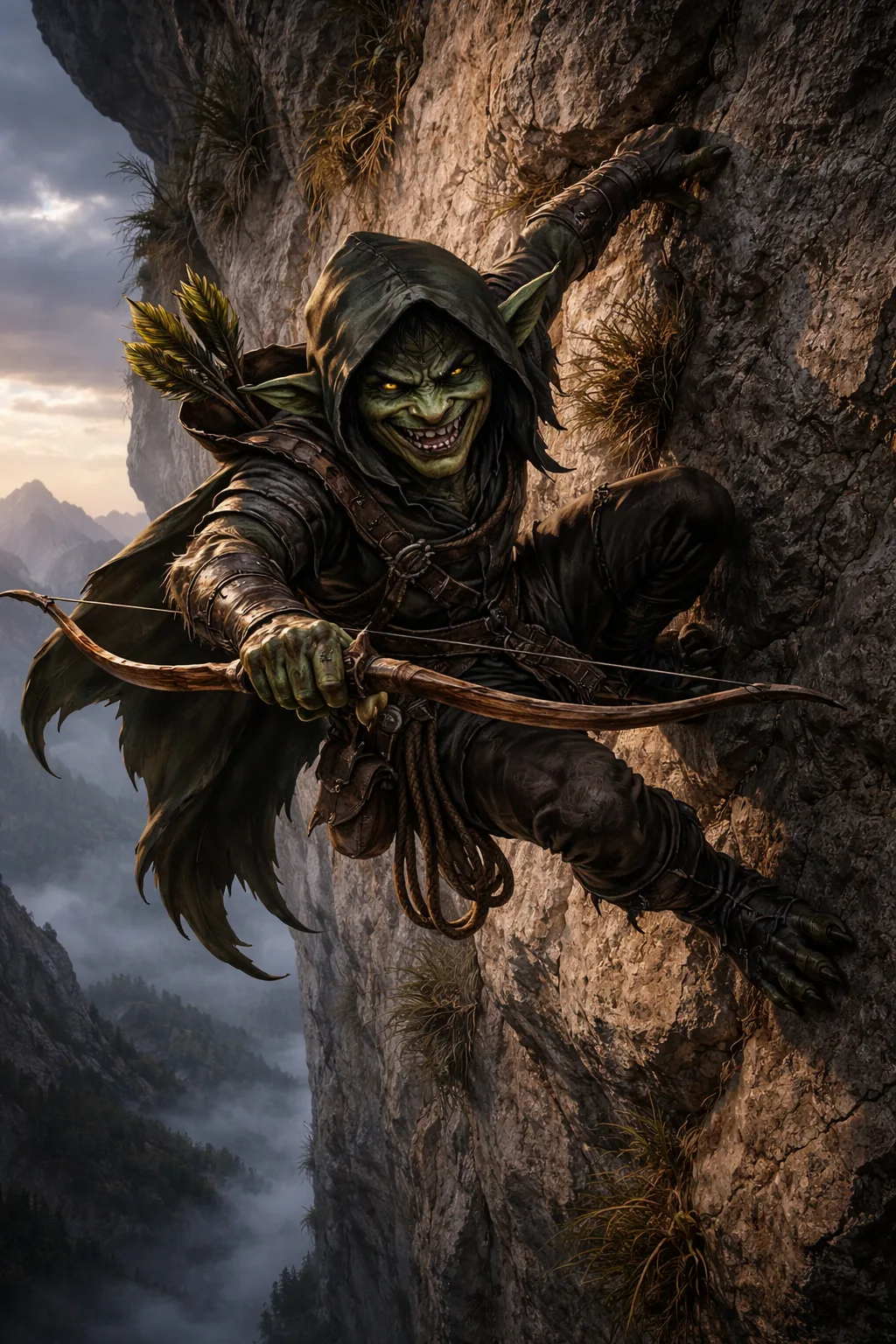
Cliffstalker moving through elevated terrain for an unseen approach
Cliffstalker field depiction: height, surface, and angle turned into the path no one checks.

Vocation Dossier

Classification
Ranger Archetype
Doctrine Path
Cliffstalker
Common Name
No fixed common name recorded in public circulation
Primary Role
Ambusher, elevated hunter, vertical scout, and angle-of-attack specialist
Cultural Origin
Mountain passes, cliff roads, ruin heights, forest canopies, city walls, and other elevated terrain
Associated Themes
Elevation, angle, surface, concealment, unseen approach, gravity, ambush, and impossible lines of attack
Public Features
Feature names pending official release

Rules text, numbers, and full playable mechanics are intentionally withheld from the public archive record.

Overview

The fight is decided by where it begins.

A Cliffstalker does not treat combat as an exchange of blows. They treat it as a problem of position.

Where others move across the battlefield, the Cliffstalker moves through it, turning elevation, surface, and orientation into weapons. Walls, ledges, branches, broken stone, and sheer drops become routes of approach that most enemies never think to defend.

They do not need the safest path. They need the one no one checks.

Subclass Record

Doctrine, progression, training, and signs.

This public record preserves the identity of the Cliffstalker path as a doctrine of elevation, unseen approach, and attacks from unguarded angles.

Doctrine

“You keep looking out. That’s your problem.

You watch the path ahead, the ground beneath your feet, the things you think can reach you. That’s where danger usually is.

No one ever looks up. Not when they’re moving. Not when they’re fighting. Not even when something feels wrong.

So I don’t hunt from the ground. I hunt from wherever you never think to check.

By the time you do...

you’re already dead.”

The Cliffstalker does not approach combat as an exchange of blows, but as a problem of position. Where others move across the battlefield, the Cliffstalker moves through it, treating elevation, surface, and orientation as variables rather than limits.

This discipline rejects the shared assumption that the ground is the center of conflict. Most combatants anchor themselves to a familiar understanding of direction: down is beneath them, danger approaches along the horizon, and the front is where the fight begins. The Cliffstalker operates outside that agreement.

Central to the path is unseen approach. A position is not valuable because it is high, hidden, or safe in isolation. It is valuable because the enemy has not accounted for it. From that place, distance becomes protection, elevation becomes concealment, and the first strike arrives without contest.

An arrow loosed from an expected angle can be answered. A blow delivered from a direction the target never defended rarely can. In this way, the Cliffstalker does not rely on overwhelming force. They decide when and from where the engagement is allowed to exist.

Feature Progression

The public archive preserves the recognized feature progression for this archetype by name only. Complete rules text remains reserved for official release material.

Ranger LevelFeature
3rdUnseen Approach
7thVertical Hunter
11thKilling Angle
15thNo One Looks Up
Training and Calling

Cliffstalker training begins by breaking the habit of thinking from the ground. Apprentices learn to read overhangs, tree lines, broken walls, cliff faces, rooftops, ravines, and ruin arches as routes rather than scenery.

Balance and patience matter as much as marksmanship. A Cliffstalker must know where weight can rest, where stone will crumble, where a branch will hold, and where an enemy’s eyes will refuse to look until too late.

The path adapts well to border scouts, mountain hunters, ruin-delvers, canopy watchers, wall-runners, and any ranger whose work depends on attacking from the place others have dismissed as impossible.

Reputation

Cliffstalkers are rarely praised for spectacle. Their work is often understood only after the fact: a watch line broken from above, a ravine crossed without a footprint on the road, an ambush reversed before the ambushers realize they were exposed.

Those who survive encounters with them report the same unease afterward. Ceilings feel too high. Branches seem too quiet. Empty ledges become difficult to ignore.

Companions learn to trust the empty angle. When a Cliffstalker vanishes from the path, it usually means the fight has already begun somewhere the enemy has not yet thought to look.

Signs and Presentation

Common signs associated with Cliffstalkers include rope scars across gloves, worn boot edges, hooked climbing tools, chalk dust, light packs, and the reflexive habit of studying roofs, branches, cliffs, and rafters before entering a place.

They are often most comfortable above the expected line of sight. Even at rest, many choose ledges, trees, wall tops, or broken stone where they can watch from an angle no one else is using.

  • A threat that arrives from above, behind, or beneath the expected line of defense.
  • A climber moving across stone or timber with almost no visible pause.
  • A vantage point chosen because no sensible enemy would think to guard it.
  • A strike that seems impossible until the missing angle is finally understood.
Chronicler’s Note

Field observers often misclassify Cliffstalker engagements as impossible shots, sudden disappearances, or attacks delivered from empty air. The usual error is assuming the hunter occupied the same plane as the target.

Over time, the practitioner ceases to see terrain as a series of obstacles. It becomes a network of surfaces, angles, and moments of exposure. They do not strike without warning. More precisely, the warning was never seen.