Deeds & Destinies / Martial Archetype

Blade Dancer

Fighters who turn motion, timing, and footwork into a rhythm their enemies cannot escape.

Seal of the Aelorian Archives
Archival Release Authorization

Released by the Aelorian Archives for public study of recognized vocation traditions within Khassid.

This record preserves cultural doctrine and feature names without disclosing complete mechanical instruction.

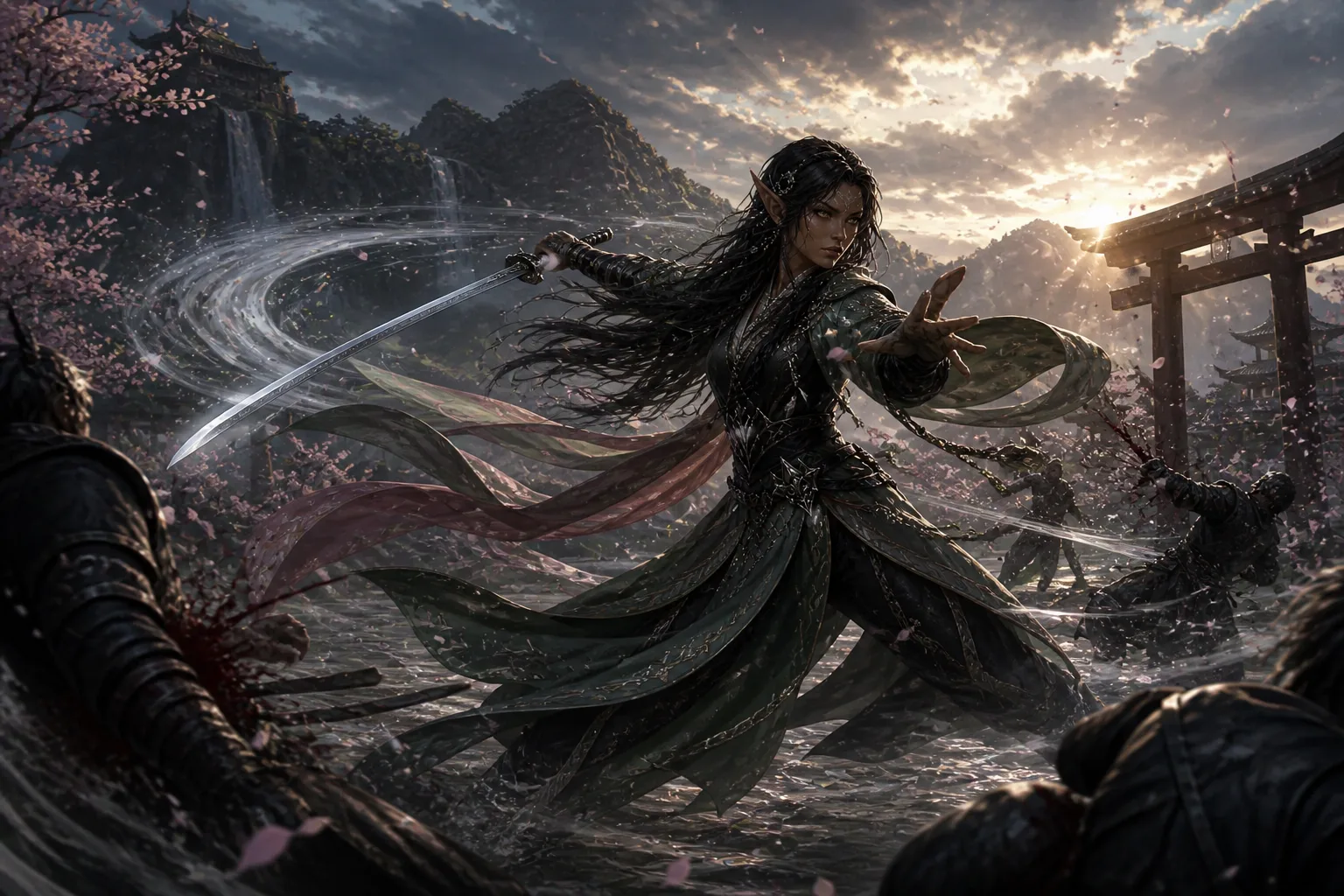
Blade Dancer fighter guiding a duel through motion and rhythm
Blade Dancer field depiction: grace, rhythm, and lethal timing brought into the duel.

Vocation Dossier

Classification
Martial Archetype
Doctrine Path
Blade Dancer
Common Name
No fixed common name recorded in public circulation
Primary Role
Duelist, battlefield mover, rhythm-breaker, and precision finisher
Cultural Origin
Martial schools of footwork, paired rhythm, dueling forms, battlefield motion, and masterstroke timing
Associated Themes
Grace, rhythm, movement, timing, riposte, misdirection, continuity, presence, and the masterstroke
Public Features
Feature names pending official release

Rules text, numbers, and full playable mechanics are intentionally withheld from the public archive record.

Overview

The duel has already entered their rhythm.

The Blade Dancer is defined by grace, but never as ornament alone.

Their grace is motion made deliberate: every step carrying intent, every turn shaping what follows, every pause placed where the opponent cannot afford it.

They do not trade blows. They enter the flow of the fight and guide it until only one ending remains.

Subclass Record

Doctrine, progression, training, and signs.

This public record preserves the identity of the Blade Dancer as a martial doctrine of grace, rhythm, footwork, riposte, and the inevitable masterstroke.

Doctrine

“You think this is about grace.

It is. And it isn’t.

This is a dance. You are my partner now.

My blade takes the lead. You follow.

A step, a turn, a pirouette you never saw begin. You lunge. I answer. A riposte, and now you are somewhere you did not choose to be.

You are not fighting me. You are trying to keep pace.

And when you fail, when the rhythm leaves you even for a breath, your breath leaves you.

That is my Masterstroke.

The dance continues, and I take a new partner.”

The Blade Dancer is defined by grace, but not as ornament or display. It is the grace of motion made deliberate, where each step carries intent and each turn shapes what follows.

Where others measure success through strength, speed, or endurance, the Blade Dancer measures it through inevitability: the quiet certainty that a moment will end exactly as they intend.

This path rejects the notion that combat is an exchange. A Blade Dancer does not trade blows. They enter the flow of a fight and guide it, allowing each movement to narrow what is possible until only one outcome remains.

Movement creates outcome. By advancing, yielding, or remaining still with purpose, the Blade Dancer establishes a rhythm that others cannot help but follow.

Feature Progression

The public archive preserves the recognized feature progression for this archetype by name only. Complete rules text remains reserved for official release material.

Fighter LevelFeature
3rdOpening Step
7thRiposte Rhythm
10thMasterstroke
15thUnbroken Flow
18thLast Partner
Training and Calling

Blade Dancer training begins with footwork before blade work. Apprentices learn how distance changes when a body turns, how balance can be offered and withdrawn, and how an opponent can be invited into a step they believe they chose.

Precision, in this context, is not only accuracy. It is timing, presence, and continuity. The outcome of a strike is decided before the blade is seen, in the breath and stance that made the strike inevitable.

When the flow breaks, the Blade Dancer does not force the moment. They return to the beginning, reestablish the rhythm, and let the dance resume on their terms.

Reputation

Blade Dancers are often mistaken for performers by those who see only the elegance of their movement. Survivors tend to correct that misunderstanding quickly.

Against them, a duel begins to feel less like opposition and more like being guided through a pattern. A lunge becomes an invitation. A retreat becomes a turn. A mistake becomes the place where the Masterstroke was waiting.

On a battlefield, their presence alters how others move through space. They do not merely occupy ground. They redefine the path through it.

Signs and Presentation

Common signs associated with Blade Dancers include light blades, balanced stances, turned shoulders, measured breathing, careful attention to music or cadence, and the habit of stepping before the opponent understands why.

They often appear calm in motion because they are not chasing the fight. They are leading it.

  • A fighter whose grace hides control rather than flourish.
  • An opponent moved into danger by choices they thought were their own.
  • A riposte that feels less like an answer than the next step in a prepared sequence.
  • A final strike delivered when rhythm, breath, and awareness fail together.
Chronicler’s Note

Field observers often overemphasize the beauty of the Blade Dancer’s form. This is understandable, but incomplete. The beauty is a consequence of efficiency, not the purpose of the discipline.

The Blade Dancer is not faster because they move first. They are faster because once the opponent begins to move, they are already within the dance.