

The Living Expanse
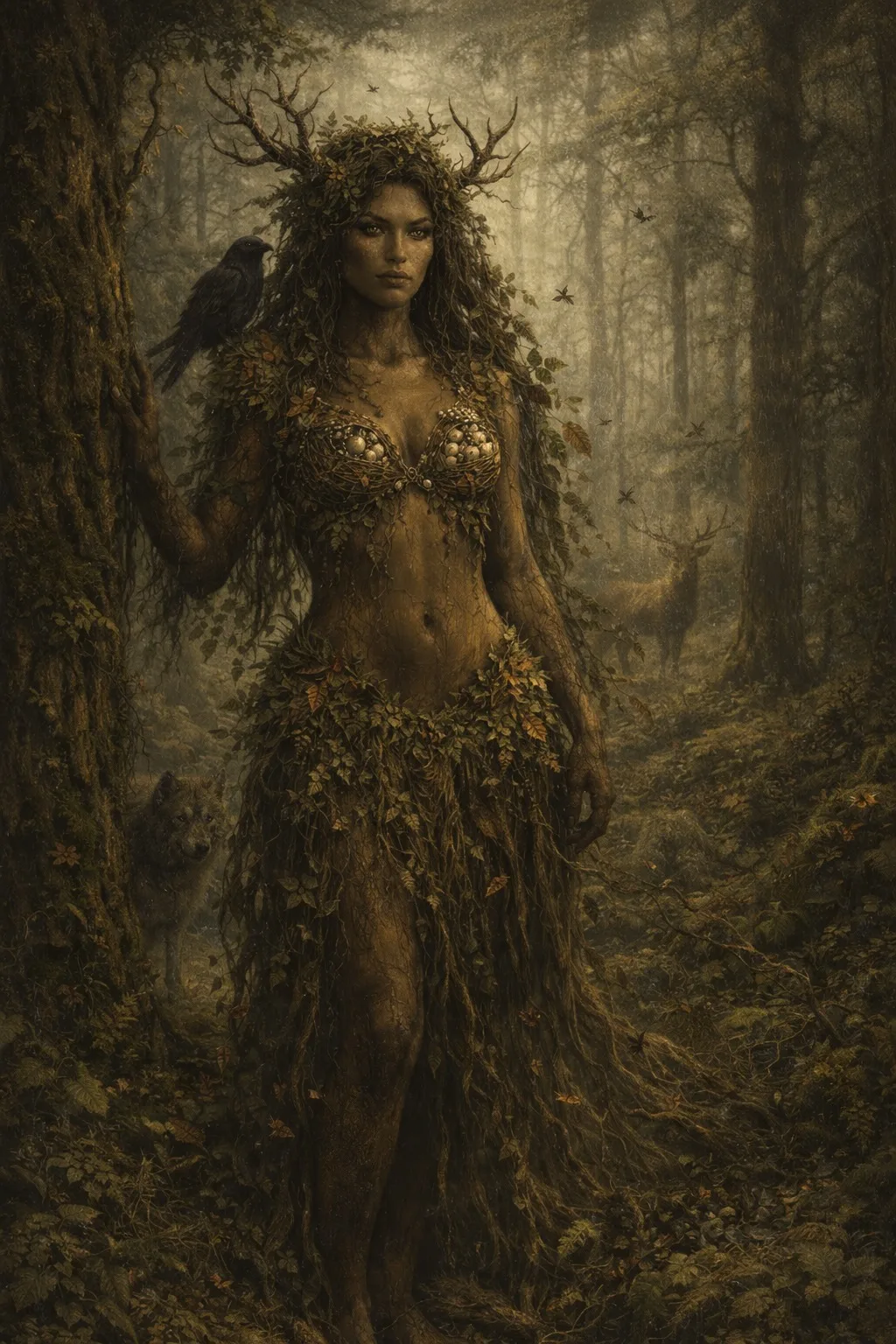
The Wild is not a constructed divinity nor a being elevated through cultural reverence. It is a primordial expression of life itself—an emergent, self-sustaining system through which all living processes are bound. It does not govern nature; it is the condition under which nature exists and persists.
Across Khassid, The Wild is understood as the underlying continuity linking growth, decay, predation, migration, and renewal. No organism, environment, or system operates independently of this framework. What is often described as “balance” is not imposed order, but the natural result of countless interdependent processes functioning without central control.
The Wild is frequently perceived by mortal cultures as chaotic due to its resistance to imposed structure. However, this perception arises from incomplete understanding. Observed patterns demonstrate consistency, continuity, and systemic correction rather than randomness. The Wild does not act with intent in a manner recognizable to structured theology; instead, imbalance is followed by response, and excess is met with adjustment.
Certain archival scholars have proposed that The Wild does not conform to established divine classification models. This position arises not from confirmed origin, but from the consistent failure of theological, historical, and comparative frameworks to adequately categorize its nature or function. No surviving record, divine testimony, or observed phenomenon has clarified its point of origin or limits. As a result, The Wild is provisionally treated within the Archives as a primordial constant of existence rather than a discrete and bounded deity. All such classifications remain incomplete.