

Archival Summary
The Balance That Allows All Else To Remain
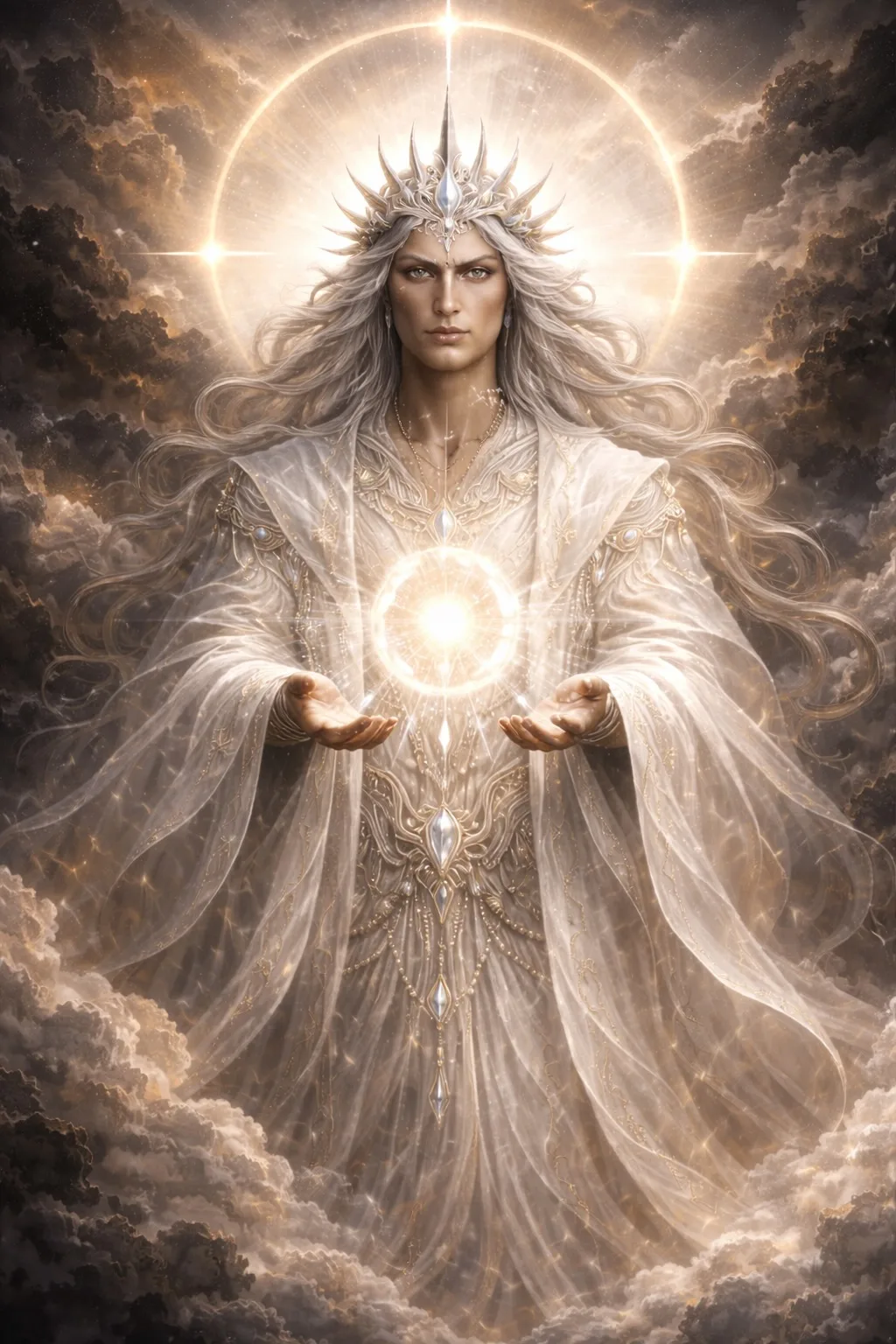
Aeru is understood across all recorded traditions as the originating principle from which all other divinity—and by extension, all existence—emerged. Neither singular in identity nor divided in form, Aeru represents the equilibrium that allows creation to occur without collapse, excess, or void. Their portfolio is not expressed through dominance over any single aspect of reality, but through the maintenance of relationship between all aspects: life and death, growth and decay, motion and stillness.
Aeru is not described as a ruler among gods, nor as their direct creator in any singular act. Rather, they are recognized as the condition that permits divinity to arise at all—the foundation from which the first powers emerged and through which all subsequent divine presence remains possible. Their influence is not characterized by intervention, but by continuity: ensuring that systems persist, cycles complete, and imbalance does not irreparably fracture the structure of reality.
Prior to the Cataclysm, worship of Aeru was rare and largely philosophical, with most cultures engaging instead with deities of immediate and specialized concern. In the aftermath, this pattern shifted. As divine conflict became understood as a source of existential instability, Aeru came to be recognized not only as foundational, but as corrective—an authority capable of constraining excess where other gods could not. Among mortals, this has produced a measured but notable increase in reverence, particularly in contexts where balance, restraint, and divine limitation are considered necessary for continued survival.
Even so, veneration of Aeru remains distinct in character. Devotion is expressed through mediation, restraint, and the preservation of continuity rather than appeals for favor or intervention. Their significance is therefore not reactive, but structural: Aeru is not called upon to act, but understood as the reason action remains possible.