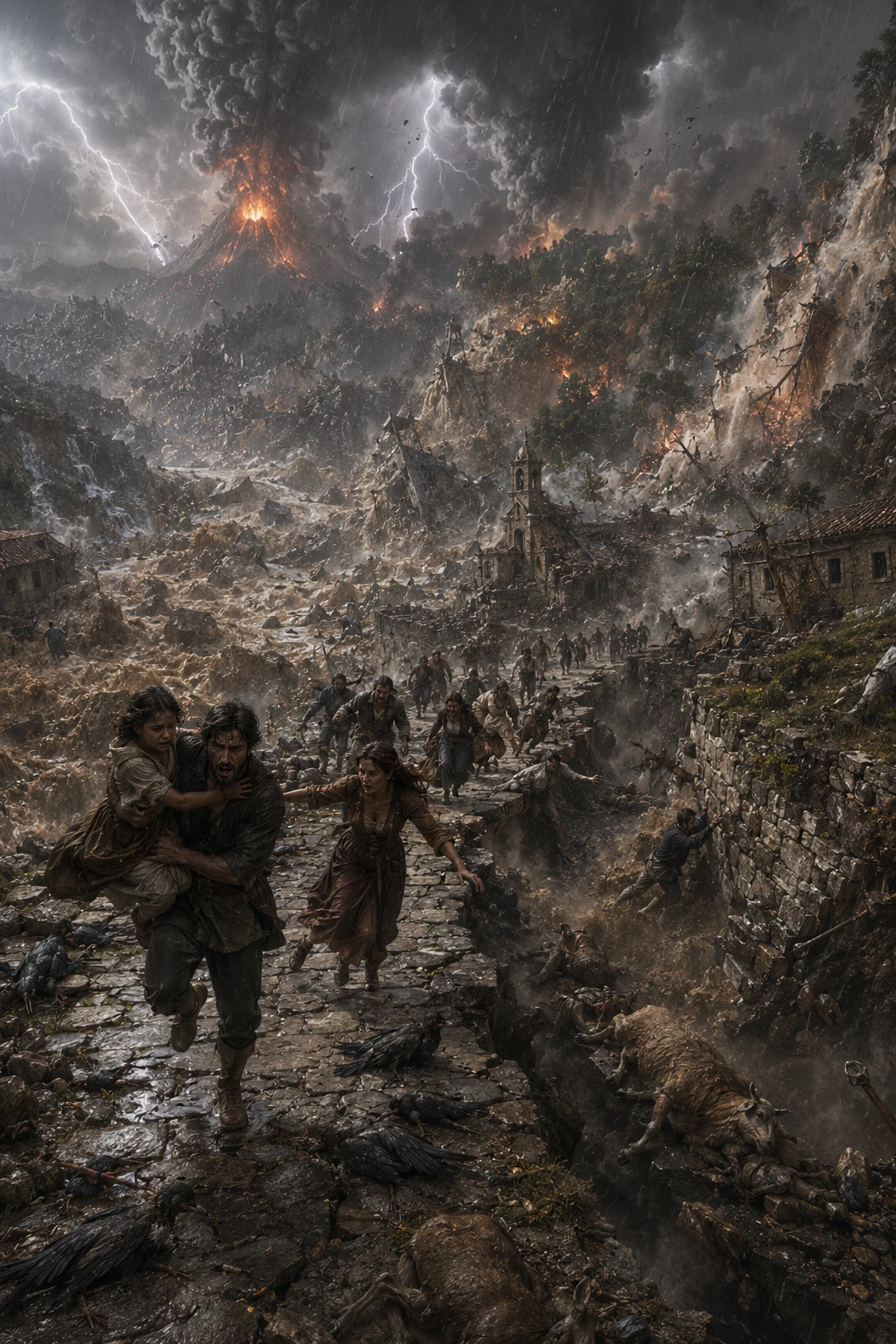
The Cataclysm nearly destroyed Khassid. It grew from mortal ambition, divine rivalry, and the failure of humanity’s gods to exercise the responsibility entrusted to them. The suffering reached The Wild, whose anguish became the Scream that shook creation and brought Aeru back to confront the pantheon.
The world survived, but restoration did not return it to what it had been. The Cataclysm left damaged lands, unsettled magic, enduring losses, and a new covenant governing divine power. To understand Khassid is to understand a world living with those consequences.
This explanation follows Illario’s account to Aleryn. Some of what Illario recounts belongs to divine memory, including the identity of a god erased from mortal remembrance.
How the world came to break
For nearly five millennia, Khassid flourished under divine guidance. That order depended upon a balance between mortal desires and divine purpose. As human aspirations grew and the pantheon expanded, the gods increasingly failed to maintain it.
Tlaxitan’s tyranny bound populations beneath oppressive regimes. Kaemir’s betrayals broke alliances and trust. Miné’s greed encouraged ambition and violence without restraint. Thyrron, whose domain encompassed Aspiration, Pride, and Ambition, helped turn the pursuit of greatness into arrogance, vanity, and destructive self-interest.
The failure extended beyond those who actively deepened the crisis. Other gods became absorbed in their rivalries or failed to act. Illario does not exempt the good gods: their inaction helped allow the ruin to spread. Mortals suffered while the powers meant to guide them became part of the danger.
Oceans raged, mountains fell, and storms tore across the world. The damage reached into The Wild, whose essence flowed through the forests, rivers, and living beings of Khassid. Each act of destruction deepened that suffering until the world stood near collapse.
The Scream
The Wild’s Scream was anguish felt throughout creation. Forests trembled, rivers burst their banks, and mortals and gods alike experienced the living world recoiling from its own destruction. Even the gods who had flourished amid suffering were troubled by what they felt.
The other pantheons responded by protecting their peoples. The Aerisathyn closed the Ithils to Khassid, sheltering their people while grieving for the Syl’Aeris who remained behind. The Gor’Kell fortified the lands and waters around Gharnakthul. The Dûn-Karr strengthened the earth supporting the mines and fortresses of the Barazûn.
The Hearthweave made a different sacrifice. Recognizing that protecting their own people would mean little if The Wild broke, the Felden gods went to share that suffering. They took more of The Wild’s pain upon themselves than any being should have borne. In doing so, they left the Felden without their full protection during the catastrophe.
The Felden paid dearly. Illario recounts that they nevertheless understood the choice their gods had made and did not blame them. He credits the Hearthweave and the Felden with a debt owed by Khassid for its survival—a sacrifice The Wild remembers.
Yet protection and sacrifice could not remove the cause of the crisis. Humanity’s gods had to be stopped.
Aeru’s judgment
The Scream drew Aeru’s attention back to Khassid after centuries of silence. The Creator confronted the human pantheon with the responsibility it had betrayed. The gods had been entrusted with Khassid to guide it, and their power did not excuse either their destructive actions or their failure to prevent them.
Aeru’s judgment fell upon Thyrron, whose entrusted virtues had become instruments of corruption. Thyrron was unmade and erased from existence. Their name, legacy, and memory were removed from Khassid and from mortal minds. The gods alone were commanded to retain that memory as a permanent warning.
Thyrron’s identity is therefore knowledge disclosed in Illario’s recounting; it is not a name the peoples of Khassid ordinarily remember.
Miné also faced unmaking for amplifying the ruin. The Wild intervened, asking that creation be spared further destruction. Aeru allowed Miné to continue, making clear that her existence was owed to that intervention.
Custodianship of Thyrron’s temples, priests, and legacy passed to Miné as an obligation imposed by the judgment, not a reward. Illario wonders how Miné experienced the power that accompanied it, but does not claim certainty about her private thoughts.
Renewal and the Divine Accords
Stopping the gods did not repair the world. Aeru called them to restore balance and clarify the purposes of their overlapping domains. Esharra bound scattered threads into a new harmony; Xantheris worked to tame the wild magic; Numa exposed weaknesses that could undo the restoration; and Luzion guided lost souls toward their rightful rest.
Antaz and Sujaz mended earth and sky. Morgdhav calmed the seas. Naelis restored life to barren soil. The Wild’s renewal remained immense and untamed: the spirit of the living world belonged to none of them.
To safeguard that work, Aeru established the Divine Accords. They bound divine power to responsibility through three principles:
- Restraint through accountability: the gods retained sovereignty within their domains, but their excesses could not be allowed to fracture creation again.
- Constructive rivalry: conflict remained possible, provided it served the greater balance.
- Adaptability of domains: overlapping spheres, including those of new deities, were to be resolved through negotiation or arbitration under Aeru’s authority.
The gods retained their differences and their natures. What changed was the obligation governing how they exercised their power, and the certainty that even a god could face judgment.
What the Cataclysm means for Khassid
Khassid’s present rests upon a restoration that remains incomplete. Its people rebuilt their lives, but fractures survived in the world and its magic. Storms, creatures, and dangerous magical remnants can still carry the consequences of what happened.
Divine power remains active in the setting. The Accords allow difference, conflict, and change while making their consequences matter. The gods’ authority exists alongside obligations they have already proved capable of failing.
The catastrophe also left different peoples with different inheritances. The Syl’Aeris remember separation, the peoples of Gharnakthul and the Barazûn were sheltered by divine defenses, and the Felden endured losses bound to their gods’ sacrifice for the living world. A shared catastrophe did not produce a single experience of it.
For those exploring, playing, or running adventures in Khassid, these consequences give the world its present tensions and possibilities: damaged lands awaiting understanding; forgotten places, lost knowledge, and magic or artifacts that may yet be rediscovered; divine duties tested by new circumstances; remembered sacrifices; and choices whose effects endure. The Cataclysm changed how divine responsibility is enforced and left Khassid with consequences that restoration could not erase.